
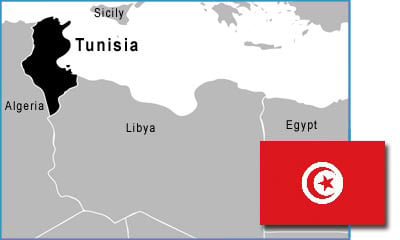
Tunisia
Tunisia has a rich Christian history. It produced the notable church fathers, Tertullian and Cyprian; and the Christian martyrs, Perpetua and Felicity. The third Council of Carthage ratified the New Testament canon in Tunisia during AD 397. However, today Christians make up less than one percent of the population. Since the Arab Spring uprising, which began in Tunisia, the country has become increasingly democratic, becoming the first government in North Africa to seek the protection of religious freedom. But even with a rich Christian heritage and increased religious freedom, the Gospel is opposed by many militant Muslims and has been slow to take root in modern Tunisia.
Life for Christians
The government is still learning how to properly protect religious freedom in a culture dominated by Islam. Although it is illegal for the inhabitants of Tunisia to persecute family members who leave Islam, it still happens. If parents report a child who has become a Christian, police may arrest the child out of habit, even though changing religions is no longer illegal. Churches function openly, and Christian converts from Islam are free to worship in them. However, open evangelism or proselytizing remains illegal. In remote areas, severe persecution continues. Muslim families feel ashamed by family members who leave Islam.
 Population