Persecution News - Indonesia
Elderly Christian couple murdered
(April 29, 2009)
Riots erupt over Christian teacher's alleged blasphemy
(December 17, 2008)
Mob storms church and calls for ban
(August 20, 2008)
Indonesia Profile
|
Country Reports
| Indonesia |
|
|
|
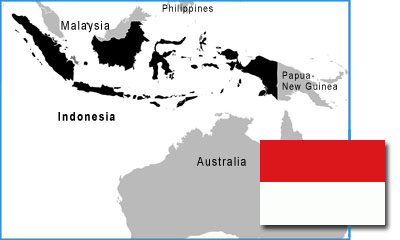
Indonesia, a vast collection of some 13,600 islands and 300 ethnic groups, has one of the largest Muslim populations in the world. The country was colonized by the Portuguese, then the Dutch, and was occupied by the Japanese during World War II. In 1945, Indonesia declared its independence. Indonesia came under the authoritarian rule of General Suharto in 1965. He held power for 32 years and it was only in 2004 that the country held its first direct presidential elections. Indonesia is still making the transition to democracy. The army, which Suharto involved in every level of government, still wields enormous power and influence. Separatist movements in provinces such as Papua are sometimes brutally suppressed. The country has faced huge challenges in recent years, from the 2004 tsunami to recurrent outbreaks of ethnic and religious violence. There is officially no state religion in Indonesia but Islam seems to be gaining strength politically, often at the expense of religious minorities such as Christians. The province of Aceh, for example, has imposed Sharia or Islamic law. Christians say they are being marginalized in society and increasingly persecuted. Many house churches have been closed. Nationally, they are the target of a concerted campaign by militant Islamist groups bent on the total Islamisation of the archipelago. In recent years, Islamist groups such as Laskar Jihad have carried out jihad or holy war against Christian communities, particularly in the Moluccas and Central Sulawesi. The Indonesian army has frequently been accused of complicity and involvement in these attacks. Calls for jihad led to widespread violence in the Moluccas and Central Sulawesi between 1999 and 2002. Thousands of mujahedin were mobilized, hundreds of churches were destroyed and Christians were forced to convert to Islam. As a result, Muslim and Christian communities were pitted against each other, with casualties on both sides. The 2002 Malino Peace Accord signed in Maluku marked a truce and the start of a reconciliation process. A fragile peace has held but attacks on Christians have continued. The murder of three Christian girls, beheaded by militants as they walked to school in Poso in 2005, sparked international outrage. Three militants were convicted of the killings in March 2007. Less dramatic, but equally alarming, was the conviction of three female Sunday School teachers from West Java for “proselytizing Muslim children” in September 2005. The women’s claim that they had the Muslim parents’ full consent was drowned out in a courtroom full of Islamist militants making murderous threats. Prayer Requests
|